In recent years, NK cell therapy, hailed as a "natural killer," has brought new hope to many cancer patients, especially due to its powerful anti-cancer capabilities when using allogeneic cells, which has attracted widespread attention.
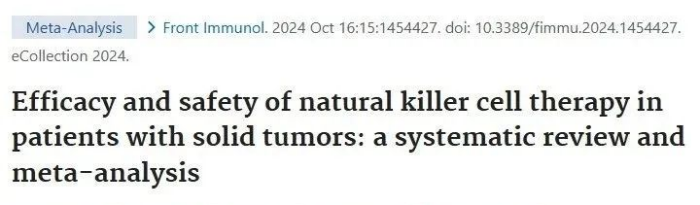
A research team from the Catholic University of Korea's School of Public Health and Sungkyunkwan University published a large meta-analysis on NK cell therapy for solid tumors in the international journal *Frontiers in Immunology*. The analysis covered 31 clinical studies and more than 600 patients with solid tumors, providing the first systematic overview of the real-world performance of NK cell therapy in solid tumors.
Significant Efficacy: Overall Tumor Shrinkage Rate Reached 38.4%, Disease Control Rate Reached 72.7%
This study clearly demonstrates the overall efficacy of NK cell therapy for various solid tumors. Data shows that among treated patients, 28.2% experienced significant tumor shrinkage, and 63.2% achieved effective disease control. Focusing solely on studies conducted after 2011, the efficacy is even more pronounced, with the overall tumor shrinkage rate increasing to 38.4% and the disease control rate reaching as high as 72.7%. This fully demonstrates that with continuous technological advancements, both the production process and therapeutic effects of NK cells have significantly improved.
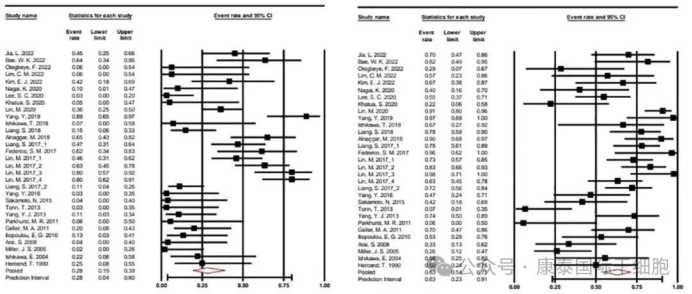
Of particular note is the remarkable efficacy of NK cell therapy in liver cancer patients. Over 70% (72.3%) of patients experienced significant tumor shrinkage, and nearly 90% (88.9%) showed stable or improved conditions. Researchers believe this positive outcome may be due to two factors: firstly, the liver's naturally favorable immune environment; and secondly, many patients received "combination therapy," integrating NK cell therapy with local treatments such as minimally invasive electroporation and intra-arterial chemotherapy, resulting in a synergistic effect and achieving a "1 + 1 > 2" therapeutic outcome.
High Safety: Extremely Low Toxicity and Side Effects, Almost No Adverse Reactions
In cancer treatment, safety is always a primary concern for both patients and doctors. NK cell therapy demonstrates excellent safety profiles. The most common adverse reaction is mild fatigue, accounting for 44% of cases; the incidence of serious side effects is extremely low, such as grade 3 or higher headaches in only 25% of cases and granulocytopenia in only 7%, and these adverse reactions are effectively controlled. Crucially, no cytokine release syndrome (CRS) or graft-versus-host disease (GvHD) were observed in clinical trials, a stark contrast to the safety concerns associated with CAR-T cell therapy.
Factors Affecting Efficacy: Allogeneic Source and Short-Term Culture Offer Significant Advantages
The study also identified several factors significantly influencing the efficacy of NK cell therapy:
Cell Source: Allogeneic NK cells (derived from the umbilical cord) showed significantly better efficacy than autologous NK cells. The efficacy rate of allogeneic NK cells reached 39.6%, while that of autologous NK cells was only 21.7%. This data provides a solid theoretical foundation for the development of "off-the-shelf" therapeutic products.
Cultivation Period: When the NK cell culture time was controlled within 2 weeks, the efficacy rate reached as high as 38.1%; however, the efficacy decreased significantly after a culture time exceeding 2 weeks. This suggests that "young" NK cells have greater therapeutic vitality.
Therapeutic Combination Strategies: Combining NK cells with local therapies, such as irreversible electroporation (IRE) or electroporation, can significantly improve efficacy. The objective response rate (ORR) of combination therapy was as high as 69.9%.
Three Reasons Why NK Cells Are More Suitable for Solid Tumors
Why are NK cells more effective at attacking solid tumors? Experts believe there are three main reasons:
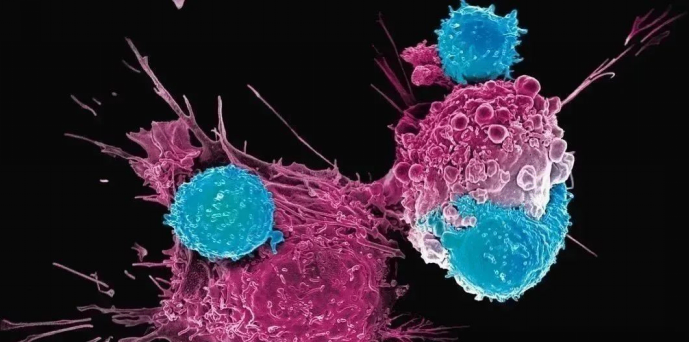
1. Broad-spectrum killing effect: No pre-sensitization is required; it can directly recognize and attack various solid tumor cells, showing therapeutic effects against lung cancer, breast cancer, liver cancer, and other solid tumors.
2. Unique recognition mechanism: Not restricted by the major histocompatibility complex (MHC), it can determine cell abnormality through a balance of "killing activation receptors" and "inhibitory receptors," accurately identifying tumor cells and overcoming the problem of tumor antigen escape.
3. Safe and "universal": Allogeneic NK cells have virtually no risk of rejection, making them more suitable for large-scale standardized preparation and truly achieving off-the-shelf supply.
Future Outlook
This study also points to the promising future of next-generation NK cell therapy. CAR-NK cells (engineered NK cells expressing chimeric antigen receptors) have demonstrated stronger killing power and good safety in early clinical studies; while iPSC-derived NK cells show high consistency and the potential for large-scale production. These advanced NK cell variants are expected to further improve treatment efficacy, increase treatment accessibility, and become a new trend in solid tumor treatment.
In conclusion, NK cell therapy, as a "potential stock" in the field of cancer immunotherapy, has brought tangible hope to countless patients with solid tumors through its groundbreaking progress. We have reason to believe that with continuous technological upgrades and in-depth clinical validation, readily available "natural killer" NK cells will occupy an even more important position in the future field of cancer treatment, writing a new chapter in humanity's victory over cancer.


Guangzhou SaiAoJin Biotechnology Co., Ltd. Official WeChat account
Contact Us
400-9965-120